Special Offer
About Fairaigle
Your Partner in Legal Solutions

Fairaigle Legal & Consultancy LLP is a premier litigation, forensic, and investigative firm providing comprehensive and client-focused legal solutions. We blend expertise, strategic planning, and compassion to help individuals and businesses navigate legal challenges with confidence.

  • Compassionate, transparent, and client-centric approach.

  • Proactive and results-driven legal strategies.

Discover more
People make the difference
We are here to provide legal consultancy

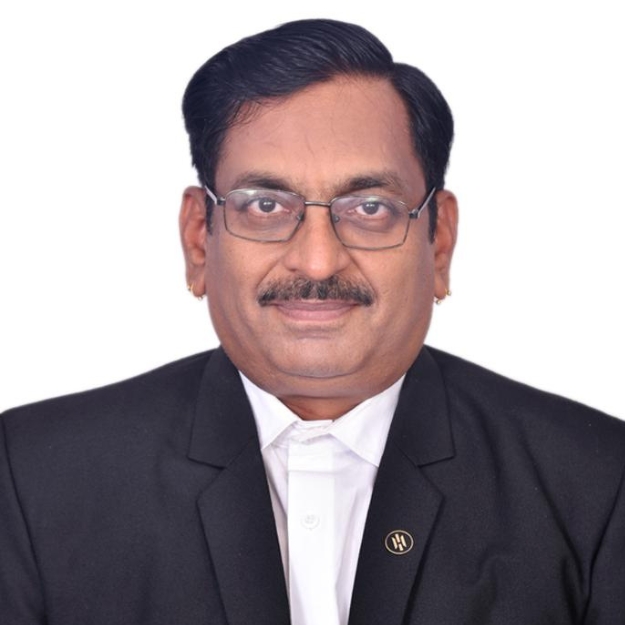
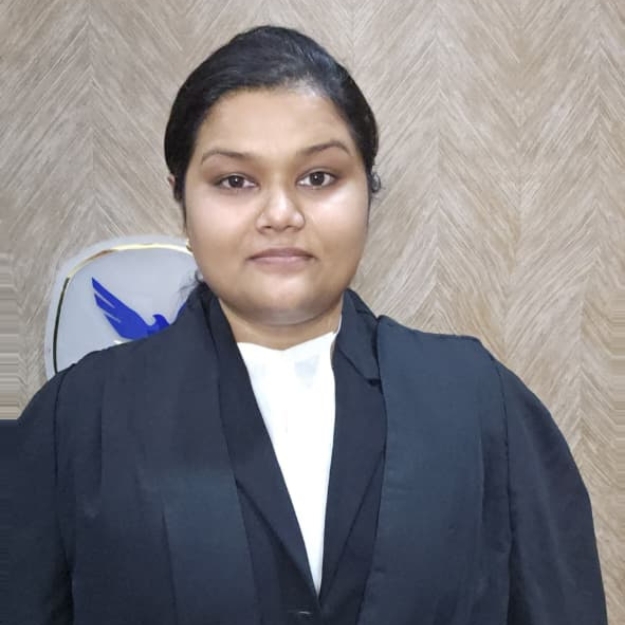
ADV. ANINDITA PAL

Founder & Managing Partner, Fairaigle Legal & Consultancy LLP

Advocate Anindita Pal is a seasoned legal professional with over 15+ years of experience in litigation, dispute resolution, legal advisory, and strategic consulting. She is the Founder and Managing Partner of Fairaigle Legal & Consultancy LLP, a multidisciplinary law firm dedicated to delivering practical, result-oriented legal solutions to individuals, businesses, and institutions.

Holding an MBA in Entrepreneurship along with a Master's Degree in Forensic Science & Criminology, she brings a unique combination of legal expertise, business acumen, and investigative insight to her practice. Her professional approach integrates law, strategy, and forensic analysis, enabling clients to navigate complex legal challenges with confidence.

Throughout her career, she has advised and represented clients across a broad spectrum of legal matters, including matrimonial disputes, criminal litigation, corporate advisory, property disputes, consumer matters, cybercrime issues, debt recovery, and contractual disputes. She is particularly recognized for her empathetic client handling, meticulous case preparation, and commitment to achieving effective legal outcomes.

As an entrepreneur and legal innovator, Advocate Anindita Pal is actively working towards leveraging technology and artificial intelligence within the legal and forensic sectors to improve access to justice, evidence management, and legal service delivery. Her vision is to bridge the gap between law, technology, and forensic science through innovative legal-tech solutions.

Professional Philosophy

"Justice is best served when legal expertise is combined with integrity, innovation, and a deep understanding of human realities."

Founder & Managing Partner
Adv. Anindita Pal
Core Areas of Practice
  • Matrimonial & Family Law
  • Criminal Litigation
  • Corporate & Commercial Law
  • Cybercrime & Digital Evidence
  • Property & Real Estate Disputes
  • Consumer Protection Cases
  • Debt Recovery & Banking
  • Contract Drafting & Documentation
  • Legal Compliance & Advisory
  • Forensic Consultation & Support
Professional Qualifications
  • Advocate
  • MBA (Entrepreneurship)
  • Master's in Forensic Science & Criminology
Why Choose Us
Why Choose Us

At Fairaigle Legal Consultancy, we combine experience, strategic thinking, and client-focused legal services to deliver trusted legal solutions. Our approach ensures compassionate support, expert guidance, and results-oriented representation across all legal matters.

Discover more
Watch Fairaigle
Fairaigle Promo Video
Our Collaborations
Ankura Homes

We are proud to announce that we collaborated with Ankura Homes to provide legal support to startups and entrepreneurs in Hyderabad.

Atal Incubation

We are proud to announce that we collaborated with Atal Incubation to provide legal support to startups and entrepreneurs in Hyderabad.

OUR LEGAL PRACTICE AREAS - COMPREHENSIVE LITIGATION SUPPORT

Our Comprehensive & Tailored Legal Services in Hyderabad

Our Legal Services Includes Consultation, Representation, And Guidance, Ensuring Effective And Efficient Resolution Of Legal Matters.

Qualified experts
Meet Our Attorneys

Senior Partner

Vinita R. Chauhan

Senior Partner

33+ years experience in handling Criminal, Civil, Property & Family Law matters, regularly representing clients in Secunderabad Family Court and local Civil Courts.

Senior Attorneys

Junior Attorneys & Associates

Trusted by Clients Across Hyderabad
What Our Clients Say About Our Legal Services
Latest Blogs
Updated Latest Blogs

Can a Business Deal Gone Wrong Land You in Jail? Delhi High Court Says No

You signed a contract. The other side didn't deliver. You're angry, you've lost money, and someone tells you: "Just file an FIR, that'll scare them into paying up."Stop right there. The Delhi High Court has been saying, loudly and repeatedly, that this shortcut is illegal. A broken business promise is not automatically a crime and using the police to collect a commercial debt can get your own case thrown out of court. If you run a business, sign vendor contracts, or are simply curious about how Indian courts are drawing the line between civil wrongs and criminal offences, this one's for you. The Big Trend: Courts Are Done With "FIR as Leverage"For years, a familiar playbook existed in Indian business circles: goods don't arrive, payment bounces, a deal falls apart — and instead of filing a civil recovery suit (which takes time), the aggrieved party rushes to the police station with a cheating or criminal breach of trust complaint. It's faster, it's scarier, and it often pressures the other side into settling. Courts have started shutting this down hard. New Law Update: The Latest Delhi High Court RulingIn a fresh order this month, the Delhi High Court stayed the registration of an FIR in a commercial dispute involving an alleged shortfall in the supply of goods worth over ₹1.75 crore. The magistrate below had directed the police to register a case, but the High Court found the order legally shaky it didn't even clearly spell out what criminal offence had actually been committed. The judge leaned on a well-known Supreme Court precedent, Indian Oil Corporation v. NEPC India Ltd. (2006), which had already warned against the "growing tendency in business circles" to convert ordinary civil disputes into criminal prosecutions as a pressure tactic. The Delhi High Court called the practice something that deserves to be actively discouraged, not encouraged by lower courts mechanically ordering FIRs. Case Law Breakdown: The ₹8.38 Crore Real Estate DisputeHere's a simpler example that shows exactly how this plays out. A group of investors had signed an MoU with a real estate developer for commercial development rights and flat allotments. When the project didn't go as promised, the investors accused the developer of fraud and cheating, and pushed for an FIR under multiple IPC sections.The Delhi High Court refused. Justice Neena Bansal Krishna held that not every broken promise is cheating for a criminal case to stick, there has to be proof that the person never intended to honour the deal right from the start. In this case, the court found the real story was a failed business arrangement, not a scam. The flats weren't delivered as expected, yes but that's a contract problem to be fought out in a civil court, not a police station. The court's core reasoning, in plain English: disappointment with a business outcome isn't the same as being cheated. Intent to deceive has to exist at the time the deal was made not just be assumed after things go wrong. The Important Exception Nobody Talks AboutThis isn't a blanket rule that FIRs can never follow a contract dispute. In 2025, the Supreme Court actually revived an FIR that the Delhi High Court had quashed, clarifying that simply having a parallel civil case doesn't automatically mean the criminal complaint is baseless. If there's genuine prima facie evidence of forgery, fabrication, or fraud, the criminal process can still run alongside a civil claim. Takeaway: courts look at facts, not labels. Calling something "cheating" doesn't make it cheating. But real evidence of fraud isn't erased just because a contract also exists.What This Actually Means for YouIf you're a business owner or vendor: don't assume an FIR is your fast lane to recovering dues. If the dispute is genuinely about delayed delivery, quality issues, or payment default with no proof of dishonest intent from day one, criminal courts likely aren't the right forum and you could face costs for misusing the process.If an FIR has been filed against you over what looks like an ordinary business disagreement, you may have strong grounds to approach the High Court under Section 482 CrPC (or its BNSS equivalent) to get it quashed.If you're a corporate legal team: document intent-related communications carefully. Emails, WhatsApp chats, and payment timelines that show good-faith effort matter enormously if a criminal complaint is later filed against your company.Frequently Asked QuestionsQ: Can I file an FIR just because someone didn't pay me as agreed? Not automatically. Non-payment alone is usually a civil breach. You'd need to show dishonest intent existing at the time the contract was made.Q: What's the difference between "cheating" and "breach of contract"? Breach of contract is simply failing to keep a promise. Cheating requires proof that the person never intended to keep that promise in the first place.Q: I already filed a civil suit can I still pursue a criminal case for the same dispute? Yes, in principle, if there's independent evidence of fraud. But courts will scrutinise whether the criminal complaint is genuine or just a pressure tactic.Q: My FIR was quashed does that mean I lose my money? No. Quashing an FIR doesn't affect your right to recover dues through a civil suit or arbitration; it only removes the criminal angle.Q: What about property or employment disputes same rule? Broadly yes. Courts apply similar logic in property disagreements (e.g., builder-buyer disputes) and employment contract breaches: the wrong needs criminal ingredients, not just a broken promise, to justify police action.Q: Where can I read the actual judgments? You can check official orders on the Delhi High Court website and track Supreme Court judgments via main.sci.gov.in.The message from the Delhi High Court is consistent: contracts belong in civil court, crimes belong in criminal court, and mixing the two to gain leverage will backfire. If you're dealing with a business dispute, get proper legal advice before choosing your battlefield it could save you time, money, and a wasted trip to the police station.Book your consultation today
Safe Harbour Liability: Why Creators & Platforms Can't Stay Passive

IntroductionFor years, "safe harbour" was the quiet safety net that let platforms and creators sleep at night. Host third-party content, don't interfere, remove what's flagged, and the law would treat you as a neutral conduit, not a publisher. That comfort is fading fast.Regulators across the world, and now sharply in India, are rewriting the deal. Safe harbour is no longer a badge you wear automatically. It is a privilege you must keep earning, in real time, through proactive moderation. Miss the mark, and the immunity that once protected you can vanish, exposing creators and platforms to civil and criminal liability for content they never even created.If you run a platform, manage a community, or build a following as an independent creator, this shift affects you directly. Here is what is changing, why it matters, and what to do about it.What Is Safe Harbour Liability, ReallySafe harbour is a legal shield, traditionally under Section 79 of India's Information Technology Act, that protects intermediaries from liability for content posted by users, provided the platform exercises due diligence and does not conspire in or knowingly benefit from unlawful content.In simple terms, if someone posts something illegal on your platform and you had no role in creating it, you were traditionally not treated as the publisher, as long as you acted responsibly once you learned about it.That "acted responsibly" part is where everything is changing.From Reactive Takedowns to Proactive ModerationUntil recently, most platforms only needed to act after receiving a complaint or court order. That reactive model is being replaced by a proactive one.Under the newer Information Technology Rules framework, significant platforms are now expected to actively detect, label, and remove harmful or synthetically generated content before it spreads, not just after someone complains. Takedown windows have also tightened dramatically, with some categories of unlawful content requiring removal within hours of formal notice, and complaints involving individuals expected to be actioned on a similarly compressed timeline.This is a structural shift. Waiting for a notice and then acting is no longer enough to preserve your immunity. Regulators now expect continuous monitoring, traceability, and swift, demonstrable action.Why Independent Creators Are Not ExemptMany creators assume safe harbour debates are a "big tech" problem. That assumption is increasingly risky.Creators who run communities, forums, comment sections, fan groups, or user-generated content spaces on their own platforms or apps can themselves be treated as intermediaries. If your platform hosts user comments, uploads, or interactions and you fail to build in grievance redressal, content moderation, and compliance processes, you may not get the protection you assumed you had.Independent creators are also increasingly exposed as victims, not just as intermediaries. Deepfakes, impersonation accounts, morphed images, and synthetically generated content targeting a creator's name, face, or voice can spread rapidly across platforms. When a platform fails to act on such content proactively, the creator bears the reputational and financial damage while regulators debate whether the platform's immunity should have collapsed.The Real Risk of Non-ComplianceLosing safe harbour protection is not a technicality. It changes a platform's legal position entirely, from a neutral host to a party potentially liable for the content itself.The practical risks include:Civil liability for defamation, privacy violations, or intellectual property infringement tied to user content.Criminal exposure in cases involving obscene material, threats, incitement, or synthetically generated harmful content.Regulatory penalties and directions from government authorities for non-compliance with proactive moderation and takedown timelines.Reputational damage that often outlasts the legal dispute itself, particularly for creator-led platforms and startups.For independent creators, the added risk is personal: your name, image, or voice being misused while the hosting platform slow-walks removal, and no immediate legal remedy is in sight.What Proactive Compliance Actually Looks LikeMeeting the new standard is not about vague good intentions. It requires structured, demonstrable steps:Publishing clear, updated terms of service that specifically prohibit categories of harmful content.Setting up an accessible, functioning grievance redressal mechanism with a designated compliance officer.Building monitoring systems capable of detecting synthetically generated or harmful content before widespread circulation.Acting within the mandated timelines once actual knowledge is received, whether through a court order, government notice, or user complaint.Maintaining documented, auditable records of every moderation decision and takedown action.Platforms and creators that treat compliance as an ongoing operational discipline, rather than a one-time checklist, are the ones best positioned to retain their legal protections when challenged.What This Means If You Are a Victim of Platform InactionIf harmful, defamatory, or synthetically generated content about you has been left up despite complaints, you are not without options. The evolving legal framework increasingly recognises that platforms cannot hide behind safe harbour when they fail to act proactively. This gives victims stronger grounds to demand takedowns, pursue compensation, and hold platforms accountable for delay or inaction.The challenge is that these cases move fast, involve technical evidence, and require precise legal drafting to succeed within the compressed timelines the law now allows.How Fairaigle Legal & Consultancy LLP Can HelpFairaigle Legal & Consultancy LLP works with independent creators, startups, and digital platforms on exactly this intersection of technology and law.For platforms and creators building compliance frameworks, the firm assists with drafting compliant terms of service and grievance redressal policies, structuring moderation and escalation workflows, and advising on obligations under the current Information Technology Rules so that safe harbour protection is not lost through avoidable gaps.For victims of online harassment, impersonation, defamation, or synthetically generated content, the firm helps identify the right legal remedy, prepares and files takedown notices and complaints within the mandated timelines, and represents victims in pursuing accountability from platforms that failed to act.If you are unsure whether your platform is compliant, or if harmful content about you is still online despite your complaints, a timely legal consultation can make the difference between a resolved matter and an escalating one.Frequently Asked QuestionsDoes safe harbour protection still exist for platforms in India? Yes, but it is now conditional on demonstrable, proactive due diligence rather than automatic. Platforms that fail to meet moderation and takedown obligations risk losing this protection entirely.Can an independent creator lose safe harbour protection? If a creator's platform, app, or community space hosts user-generated content and lacks proper compliance mechanisms, that creator can be treated as an intermediary and held liable in the same way as a larger platform.What happens if a platform does not remove harmful content within the required timeline? Missing mandated takedown windows can strip a platform of its safe harbour immunity, exposing it to civil and criminal liability for the content it failed to remove.Are deepfakes and synthetically generated content covered under these rules? Yes. Newer amendments specifically address synthetically generated information, requiring labelling, provenance metadata, and proactive detection, with non-compliance directly threatening a platform's immunity.What should a victim do if a platform ignores their takedown request? Document the content and communication with the platform, then seek legal assistance promptly, since remedies and timelines under the current framework are time-sensitive.How can a platform prove it exercised due diligence? Through documented terms of service, a functioning grievance mechanism, timely action logs, and evidence of proactive monitoring systems, all of which should be reviewed and maintained with legal guidance.ConclusionSafe harbour is no longer a passive shield. It is an active obligation that creators and platforms must maintain through visible, timely, and well-documented compliance. Waiting for a complaint before acting is a strategy from a legal era that no longer exists.Whether you are building a platform that needs to stay compliant, or you are a creator whose content or identity has been misused online, the right legal guidance at the right time protects far more than your immunity. It protects your reputation, your business, and your peace of mind.Get in Touch If you need clarity on your platform's compliance obligations, or you are a victim seeking accountability for content that should have been removed, reach out to Fairaigle Legal & Consultancy LLP for a consultation. Timely action is often the deciding factor in these matters, so the sooner you speak with a legal expert, the stronger your position.Book Your Consultation for Expert Guidance.

AI Hallucinations: Courts Crack Down on Fake Case Law

A judge in Andhra Pradesh once based an order on four judgments that never existed. In Bengaluru, a tax tribunal recalled a ₹669-crore order after discovering it rested on citations nobody could find. In Mumbai, the High Court fined a litigant ₹50,000 for a filing so obviously AI-written it still carried the chatbot's green tick marks.None of these are edge cases anymore. They are the new normal, and courts everywhere are done tolerating it.What Is an AI Hallucination in Legal PracticeAn AI hallucination happens when a tool like ChatGPT invents a case citation, a quote, or an entire judgment with total confidence, and none of it is real. Large language models are built to predict plausible-sounding text, not to retrieve verified legal records. The result reads exactly like a real precedent, right down to the case name, the court, and the year. The only problem is that it never happened.Lawyers who skip the one step that matters, actually checking the citation against a real database, are the ones who end up in front of a disciplinary bench.The Ruling That Changed EverythingOn July 2, 2026, the Supreme Court of India set aside NCLT and NCLAT orders in the Essel Infraprojects insolvency matter after finding that six of the judgments relied on were defective. Three did not exist at all. The other three were real cases stuffed with invented paragraphs or wrong titles.The Court did not treat this as a technical slip. It called hallucinated case law comparable to a toxic gas leak in the province of law and justice, directed the Bar Council of India to frame disciplinary norms, and made clear that a decision resting even partly on fake material is no decision at all in the eyes of the law.This built on an earlier warning. In February 2026, the Court took suo motu notice of a trial court order in the Gummadi Usha Rani matter that had relied on fabricated judgments, and declared that this is not an error in the decision-making process. It is misconduct, with legal consequences that follow.A Pattern That Has Been Building for Two YearsThe Essel ruling did not come out of nowhere. It is the latest entry in a growing list of Indian cases where fake AI citations blew up in court.Bombay High Court, January 2026. A litigant was fined ₹50,000 for dumping AI-generated case laws into written submissions, complete with the telltale formatting of raw chatbot output.Delhi High Court, September 2025. A petition was withdrawn in embarrassment after opposing counsel exposed the citations as fabricated, including invented paragraphs attributed to a landmark constitutional case.Punjab and Haryana High Court, early 2026. Judges were directed not to rely on AI while drafting judgments, on the reasoning that technology cannot substitute for human reasoning.Income tax and GST tribunals, 2025 - 2026. Multiple orders, including a roughly ₹28-crore assessment upheld by the Bombay High Court, were quashed after AI-invented precedents surfaced in the record. Quasi-judicial officers, not just lawyers, have been found using AI-fabricated content in official proceedings.The same story is playing out abroad. In the United States, a public tracker has now logged more than 1,600 court decisions worldwide involving AI-hallucinated material. Sanctions have climbed from a symbolic 5,000 dollar fine in 2023 to more than 110,000 dollars in a single Oregon matter, and an Omaha attorney was suspended in April 2026 after denying, then admitting, that AI had fabricated the bulk of his citations. England and Wales, Australia, South Africa, and Argentina have all recorded similar incidents.Why the Cover-Up Is Always Worse Than the MistakeAcross nearly every sanctioned case, one detail repeats. Courts punish concealment far more harshly than the original error.Lawyers who admitted the mistake immediately and corrected the record generally received lighter consequences. Lawyers who denied using AI, blamed a junior associate, or quietly refiled without disclosure were the ones who lost their license to practice or faced six-figure penalties. Candor is the one thing a chatbot cannot supply on a lawyer's behalf.What Courts Are Doing NowThe judicial response is no longer limited to warnings. It now includes:Setting aside any order that relies even partly on unverified AI material, regardless of the outcome's substantive merit.Directing bar councils to frame formal disciplinary norms specifically for AI misuse.Escalating monetary sanctions well beyond token fines, with some orders now calculated per fake citation and per fabricated quote.Referring repeat or dishonest offenders for suspension.Instructing judges and tribunal members themselves not to rely on AI-drafted material without independent verification.The direction of travel is unmistakable. Zero tolerance is no longer a phrase in a judgment. It is becoming the operating standard.What This Means for YouIf you are a litigant, an order built on a hallucinated citation may be challengeable on that ground alone, even if you never raised the underlying facts. If you are a lawyer or in-house counsel, every AI-assisted draft now needs the same verification discipline as any other piece of work product, because supervision liability falls on the person who signs the filing, not the tool that drafted it. If you are relying on a tribunal order that turns out to rest on fake precedent, you may have real grounds to have it recalled.Frequently Asked QuestionsCan a court order be challenged just because it cites a fake case? Yes. Indian courts have already set aside and recalled orders solely because the citations relied upon did not exist or were misattributed, independent of the case's other merits.Is using AI to draft legal documents banned in India? No. The Supreme Court's own white paper on AI in the judiciary endorses its use as a research aid. What is prohibited is filing or relying on AI output without independently verifying every citation.Who is held responsible when AI generates a fake citation, the lawyer or the AI tool? The lawyer. Courts have consistently held that the duty of verification and candor sits with the advocate who signs and files the document, regardless of which tool produced the draft.Can a client be penalized for their lawyer's AI mistake? Directly, sanctions are usually imposed on counsel. Indirectly, clients have faced real damage, including opposing counsel's fees that were not reversed even after their own lawyer was sanctioned, and orders that had to be relitigated from scratch.What should I do if I suspect an order against me relied on a fake precedent? Get the citations independently verified against an authentic legal database before you file anything. If a fabrication is confirmed, it can form an independent ground for appeal, review, or recall.How Fairaigle Legal & Consultancy LLP Can HelpIf an order, assessment, or tribunal ruling against you was built on a citation that turns out not to exist, you are not without a remedy, and you do not have to work out the legal pathway on your own.Fairaigle Legal & Consultancy LLP works with individuals, businesses, and professionals who have been affected by AI-hallucinated case law, whether the fabrication came from the other side's filing, a tribunal's own order, or an assessment that relied on invented precedent. Our team independently verifies every citation in the record against authentic sources, identifies the strongest ground for appeal, review, or recall, and represents you through the process of getting a flawed order set aside.We also help lawyers and businesses build the kind of verification workflow that keeps them out of this problem entirely, so an AI-assisted draft never becomes a liability with your name on it.If you believe you have been affected by fake case law in your own matter, do not wait for the next hearing to find out the hard way. Talk to Fairaigle Legal & Consultancy LLP today for a confidential case review.

Social Media
Updated Latest Social Media
LinkedIn
Updated Latest LinkedIn
All people are equal before the law. A good attorney is what makes a difference.

Get in touch

9989347206
WhatsApp