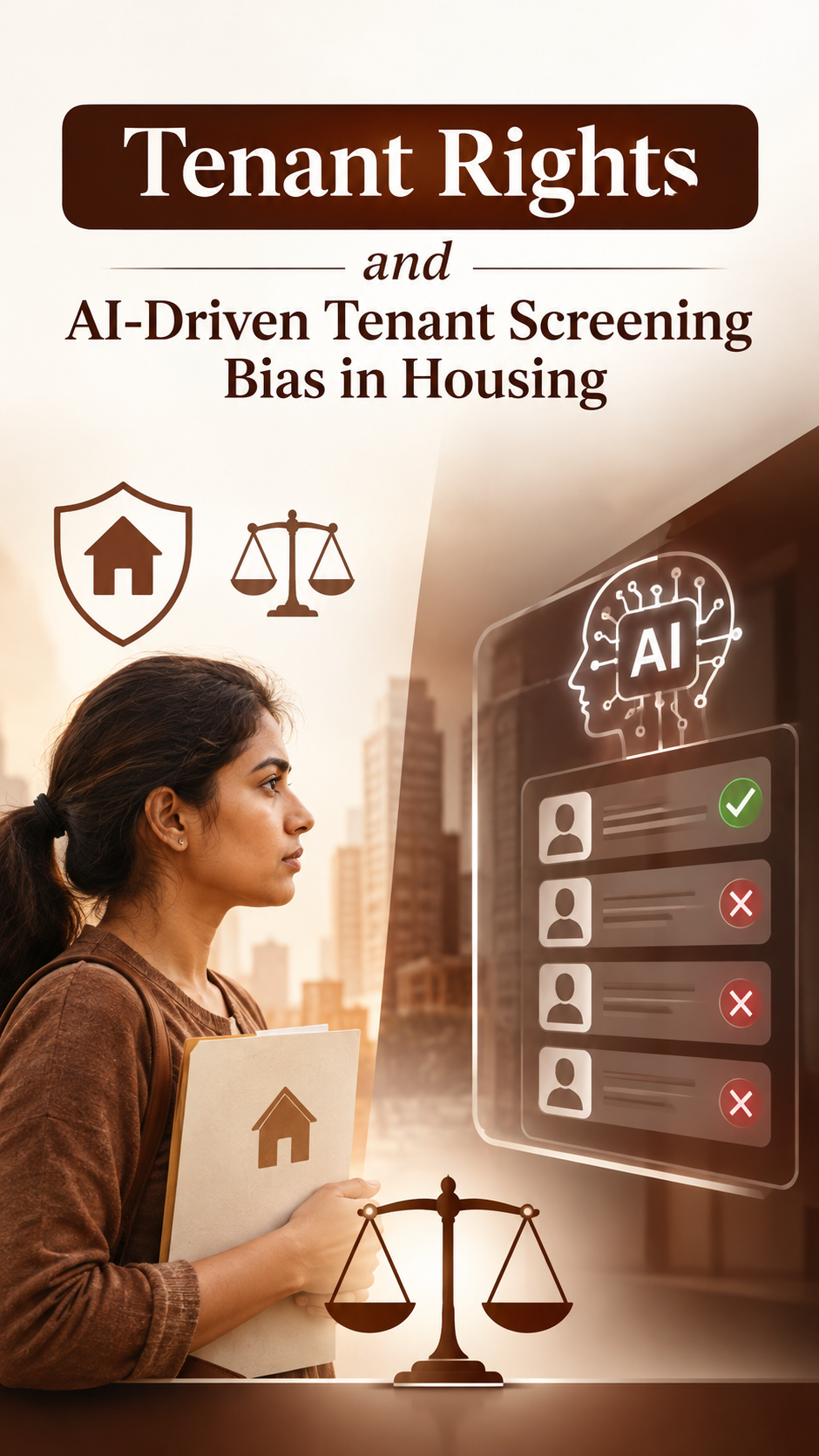
Ever Been Rejected for an Apartment and Never Found Out Why?
You filled out the application. You paid the fee. You waited. Then came the denial email vague, cold, and final. No explanation. Just "does not meet our screening criteria."
Here's what most renters don't realize: a human probably never looked at your file. A piece of software did. And that software may have used flawed data, outdated records, or factors that have nothing to do with whether you'd actually be a good tenant.
Landlords across the country now lean on automated tenant screening platforms to check credit, criminal history, and eviction records in seconds. It's fast, it's cheap, and it feels "objective." But objective isn't the same as fair and a growing pile of lawsuits, settlements, and new state laws says these tools can quietly discriminate against the very people the Fair Housing Act was built to protect.
How AI Tenant Screening Actually Works
Most screening platforms pull data from credit bureaus, court records, and eviction databases, then run it through a scoring model. The model spits out a number or a color-coded "recommendation" approve, deny, or flag for review.
The problem is what happens inside that black box. These systems often use proxy variables things like zip code, name patterns, or rental history gaps that correlate with race, national origin, or disability status even though they're never labeled that way. The algorithm isn't told to discriminate. It just learns patterns from historical data that already reflects decades of housing inequality, and then repeats them at scale.
Eviction records are a classic example. Filing an eviction case is easy and cheap for landlords, even when the case is later dismissed or the tenant wins. Many screening tools count the filing itself, not the outcome. That quietly penalizes tenants disproportionately women, people of color, and domestic violence survivors for eviction cases they never lost.
The Legal Risk Landlords Aren't Watching
The Fair Housing Act doesn't just ban obvious, intentional discrimination. It also bans policies that look neutral on paper but fall harder on a protected group a legal theory called "disparate impact." That means a landlord can lose a fair housing case even if no human ever intended to discriminate. If the algorithm's output has that effect, the landlord is on the hook, because courts have made clear that outsourcing a decision to a vendor doesn't outsource the liability.
That's exactly what played out in one of the most closely watched cases in this space. In Louis v. SafeRent Solutions, renters including a Black woman named Mary Louis sued a major screening company, arguing its scoring algorithm downgraded applicants using housing vouchers and disproportionately hurt Black and Hispanic renters. A federal court in Massachusetts approved a settlement worth about $2.275 million, and SafeRent agreed to stop issuing "approve" or "decline" recommendations for voucher holders unless the model is independently validated for fairness. SafeRent didn't admit fault, but said continuing to litigate would cost more than settling. It's one of the first cases of its kind, and it sent a clear signal: "the algorithm did it" is not a defense.
Regulators haven't stayed quiet either. The Federal Trade Commission and Consumer Financial Protection Bureau previously extracted $15 million from a major screening company over inaccurate background reports, and states are now moving faster than Washington. Colorado's AI Act treats tenant screening systems as "high-risk," requiring fairness testing, consumer disclosures, and human review before decisions go out. New York lawmakers have proposed rules forcing landlords to plainly disclose when AI is involved in a rental decision and to explain, in plain language, exactly what criteria were used. Meanwhile, federal guidance on this topic has been pulled back and reinstated more than once which means the safest legal ground right now isn't waiting on Washington, it's following your state and city rules and the underlying statute itself.
What Renters Can Do If They Get Denied
You have more leverage than you think:
If you manage rental property, a few habits go a long way:
If you've been denied housing and suspect bias, or you're a landlord looking to audit your screening process before it becomes a lawsuit, reach out to our fair housing team for a consultation.
