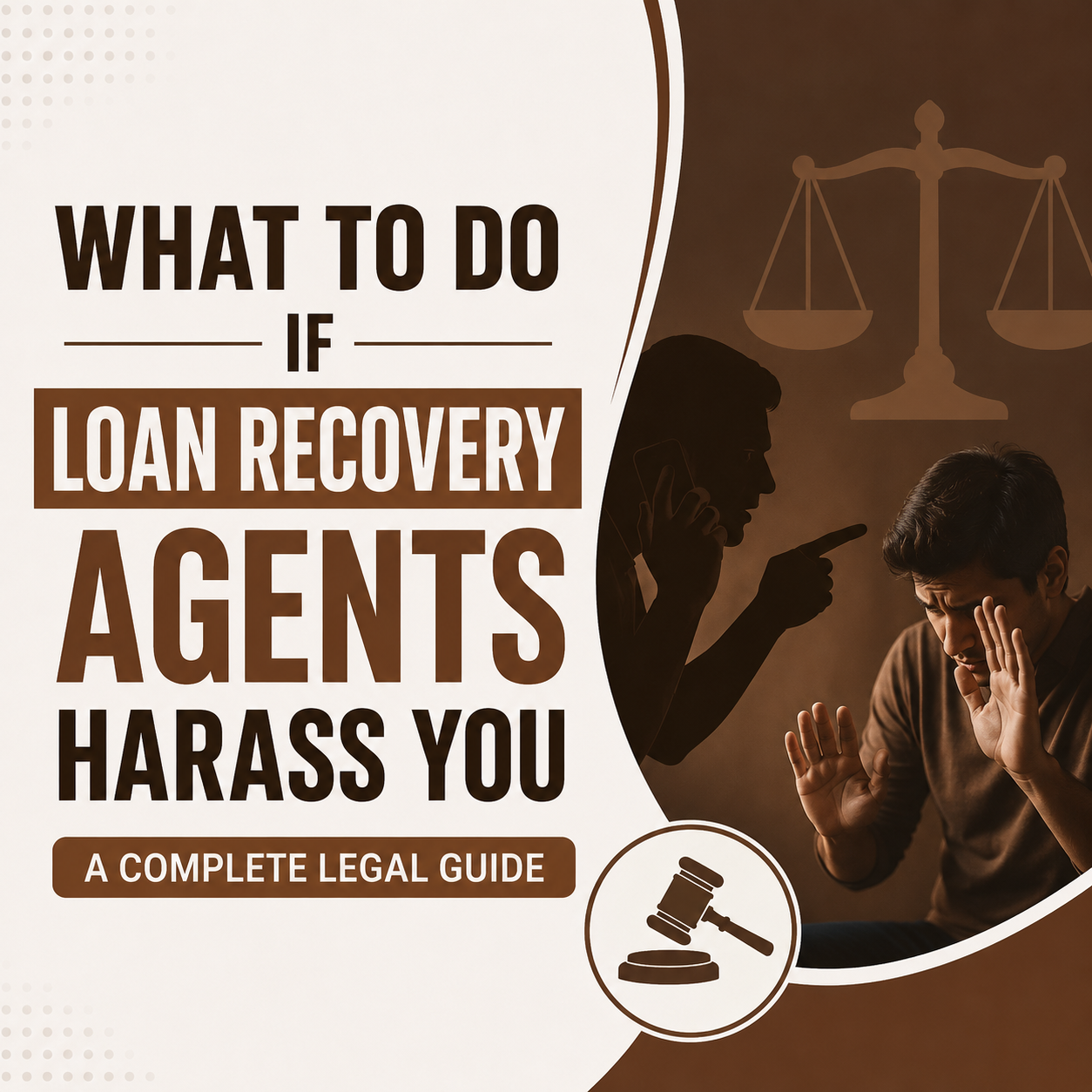
Missing a loan EMI can feel stressful enough but when it's followed by threatening calls, abusive language, visits to your workplace, or messages sent to your family and neighbours, it crosses a line from recovery into harassment. Many borrowers in India don't realize that loan recovery agents cannot do whatever they want, no matter how much money is owed. There are strict legal boundaries set by the Reserve Bank of India (RBI), the Indian Penal Code, and consumer protection laws and borrowers have real, enforceable rights.
This guide breaks down exactly what counts as harassment, what the law says, and the step-by-step action plan you can follow to protect yourself.
Understanding Loan Recovery Agent Harassment
Loan recovery agents are legally allowed to remind you about pending dues and encourage repayment. What they are not allowed to do includes:
What Does the Law Say?
RBI Guidelines on Fair Practices
The RBI's Fair Practices Code requires all banks and NBFCs to ensure their recovery agents behave with courtesy and do not resort to intimidation, harassment, or use of muscle power. Banks are held directly responsible for the conduct of the agents and agencies they hire — outsourcing recovery does not outsource accountability.
Indian Penal Code (IPC) / Bharatiya Nyaya Sanhita (BNS) Protections
Depending on the nature of harassment, several provisions may apply:
- Criminal intimidation — threats of harm to person, reputation, or property
- Defamation — public statements damaging your reputation
- Criminal trespass — unauthorized entry into your home or workplace
- Stalking or harassment provisions where agents repeatedly follow or intimidate
Consumer Protection & Banking Ombudsman Framework
If harassment stems from a bank or NBFC's outsourced agency, you can escalate the matter to the Banking Ombudsman under RBI's grievance redressal mechanism — a free, legally backed channel specifically designed for such complaints.
The SARFAESI Act's Limits
Even where a lender has legal recovery rights under the SARFAESI Act, the process of recovery must still follow due legal procedure. Agents cannot bypass court processes, seize property without notice, or use coercion as a shortcut.
Step-by-Step: What to Do If You're Being Harassed
1. Document Everything
Keep a detailed log of every call, message, and visit dates, times, what was said, and the agent's name if given. Screenshot messages. Record calls where legally permitted in your state. This evidence is the foundation of any complaint.
2. Send a Written Communication to the Lender
Write to the bank or NBFC's grievance/nodal officer, clearly describing the harassment with dates and evidence, and request that all communication happen through acceptable channels only.
3. File a Complaint with the Banking Ombudsman
If the lender doesn't resolve the issue within 30 days, escalate to the RBI Banking Ombudsman a free, time-bound grievance redressal system.
4. Approach the Police if Threats Escalate
If you face physical threats, trespass, or intimidation, you can file an FIR under relevant IPC/BNS sections. Harassment is a criminal matter regardless of the civil loan dispute.
5. Send a Legal Notice
A formal legal notice from a lawyer often stops harassment immediately, since it puts the lender and agency on record that continued misconduct will invite legal consequences, including compensation claims.
6. Consider Filing a Consumer Complaint
Mental distress, reputational harm, and unfair trade practices caused by aggressive recovery tactics can form the basis of a consumer complaint seeking compensation.
What You Should Never Do
- Don't ignore the debt entirely engaging through proper legal channels protects you better than silence
- Don't make payments to individual agents in cash without receipts
- Don't share sensitive personal or banking information over harassment calls
- Don't sign any document presented by an agent without legal review
How Fairaigle Legal & Consultancy LLP Helps Victims of Recovery Harassment
At Fairaigle Legal & Consultancy LLP, we work directly with individuals who are facing aggressive, unlawful, or abusive loan recovery practices. Our approach is built around three priorities: stopping the harassment quickly, protecting your legal rights, and pursuing accountability where warranted.
Here's how our team supports clients through the process:
- Case Assessment & Documentation Review - We evaluate your situation, review call logs, messages, and correspondence to build a clear evidence trail.
- Legal Notices to Lenders & Recovery Agencies - We draft and send formal notices that put banks and NBFCs on legal record, which frequently halts harassment within days.
- Banking Ombudsman & RBI Grievance Filing - We handle the paperwork and follow-up needed to escalate your complaint through official RBI channels.
- FIR & Criminal Complaint Assistance - Where threats or intimidation cross into criminal conduct, we guide you through filing a police complaint and support the legal process that follows.
- Compensation & Consumer Complaint Support - We help victims pursue compensation for mental distress and unfair practices through consumer forums.
- Ongoing Legal Representation - From the first notice to final resolution, our team stays engaged so you're never navigating this alone.
Our goal is simple: no borrower should have to endure threats, abuse, or public humiliation over a loan default. The law is on your side — we help you use it.
Frequently Asked Questions
Can a recovery agent visit my home at any time?
No. Recovery agents are expected to visit only during reasonable hours (generally between 8 AM and 7 PM) and must conduct themselves respectfully, without threats or intimidation.
Can loan defaulters be arrested by recovery agents?
No. Loan default is a civil matter, not a criminal offence. Recovery agents have no authority to arrest you or threaten arrest only a court, through due legal process, can order such action in specific, limited circumstances.
Is it legal for agents to contact my employer or family about my loan?
No. Disclosing your loan default to your employer, colleagues, relatives, or neighbours without your consent violates RBI's fair practices guidelines and can amount to defamation.
What should I do immediately if I receive threatening calls?
Start documenting every call and message immediately, then file a written complaint with the lender's grievance officer, and escalate to the Banking Ombudsman or police if the harassment continues.
Can I get compensation for harassment by recovery agents?
Yes. Victims can pursue compensation through consumer forums or civil suits for mental distress and unfair trade practices, especially when supported by strong documentation and legal notices.
Does having an unpaid loan mean I have no rights?
No. Owing money does not strip you of your legal protections. You are entitled to fair, respectful treatment throughout the recovery process, regardless of the amount owed.
How quickly can harassment be stopped?
In many cases, a formal legal notice alone is enough to stop harassment within days, since it signals that the matter is now being tracked and pursued legally.
Facing harassment from loan recovery agents? You don't have to handle it alone.
Fairaigle Legal & Consultancy LLP offers confidential consultations to help you understand your rights, document the harassment, and take swift legal action against unlawful recovery practices. Reach out today to protect yourself and hold the responsible parties accountable.
